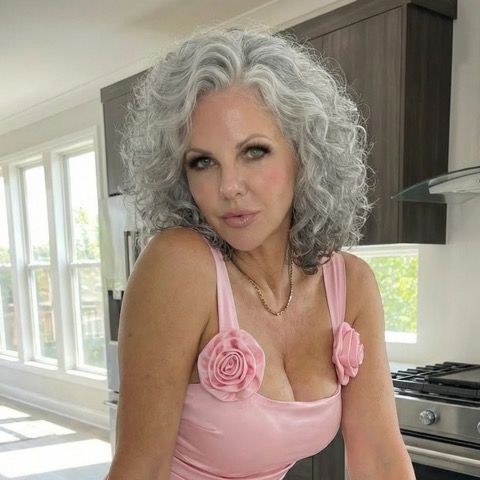
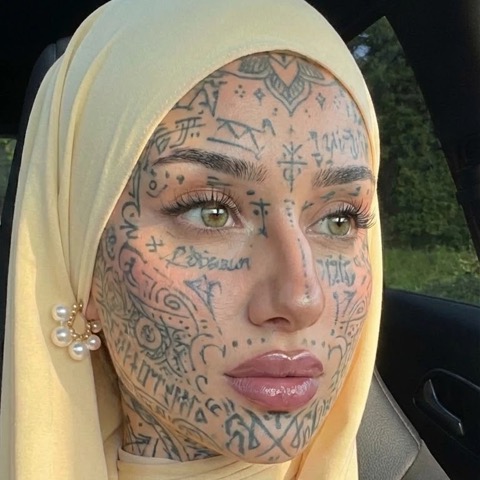
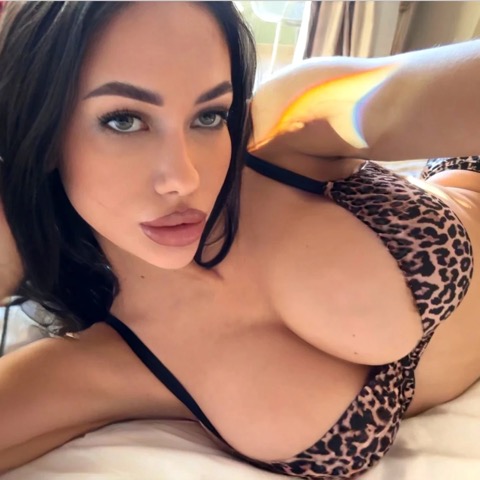
Search “ai onlyfans model generator” and you will find a wall of tools promising a turnkey virtual creator who prints money while you sleep. Most of that marketing is nonsense. There is no single button that builds a persona, generates a consistent character across hundreds of images, writes captions, runs a subscription page, and handles fans. What actually exists is a stack of separate tools plus a fair amount of manual work, and the results depend far more on marketing discipline than on which image model you pick.
We run an affiliate comparison site. We test and rank the AI image generators and companion platforms that people use for exactly this, and we see the finished output and the failure modes. This guide is the honest version of “how to make an AI OnlyFans”: what the workflow really looks like, where the platform rules bite, which generators are worth the time, and what the income actually tends to be. No hype, no affiliate fairy tales.
One correction up front, because it changes everything downstream: for a fully AI persona, do not build on OnlyFans. Build on Fanvue.
OnlyFans Restricts AI Personas. Fanvue Welcomes Them
This is the single most important decision, and most guides get it wrong.
OnlyFans is built around verified human creators. Its terms require the account holder to be a real, identity-verified person, and its policy on AI-generated and “computer-generated” content is restrictive: AI can assist a real creator, but a purely synthetic persona with no human behind the likeness sits against the grain of the platform. Accounts that present a fully fabricated model as if it were a real performer risk removal, and payouts on a banned account are a genuine loss. You can spend months building an audience and lose the account overnight.
Fanvue took the opposite position. It openly courts AI creators, has AI-specific features, and treats an AI persona as a legitimate account type rather than something to hide. That is why our creator coverage splits the two worlds, and why for an AI-first build we point people at the platforms that actually want that content. If you are choosing where to publish, start with our tested list of Fanvue creators to see what performs there, and compare it against the OnlyFans creators landscape so the difference is concrete.
The rule of thumb: real person, real face, want the biggest single audience, OnlyFans. Fully synthetic persona, Fanvue. Trying to run a fully AI model on OnlyFans while pretending otherwise is the fast path to a ban.
Step 1: Design the Persona Before You Generate Anything
The mistake almost everyone makes is opening a generator first and typing prompts until something looks good. You end up with a hundred attractive but unrelated images of a hundred different people. There is no “her.” There is no character. Fans subscribe to a person, not a slideshow.
So design on paper first. Write a one-page character brief:
- Identity: name, age (adult, always), where she is “from,” what she does. A backstory of a few sentences is enough to make captions and chat consistent.
- Look: hair color and length, eye color, body type, skin tone, distinctive features (freckles, a tattoo, a style of makeup). Be specific. “Brunette, shoulder-length, green eyes, athletic, small star tattoo on left wrist” is a spec you can reproduce. “Pretty girl” is not.
- Niche and vibe: the girl-next-door, the goth, the fitness type, the cosplayer, the luxury aesthetic. Niche beats generic every time because it gives fans a reason to pick her over the thousands of interchangeable accounts.
- Voice: how she talks. Playful, dry, sweet, dominant. This drives captions, DMs, and any chat automation later.
This brief is the source of truth. Every image prompt and every caption should trace back to it. It is also what separates a persona that feels like a person from a folder of stock renders.
Step 2: Generate the Persona With a Ranked AI Image Generator
Now the tooling. To turn the brief into a face and body you need an AI image generator that handles adult content and, crucially, lets you lock a consistent character. Not all of them do either well. Some produce great single images but cannot reproduce the same face twice. Some are strict about NSFW and will refuse the content you need. Some are cheap but low resolution, which reads as fake instantly.
This is exactly what we test, so rather than name one here, use our current rankings: the best AI nude generators page covers the tools built for this use case, with notes on realism, NSFW policy, and character consistency, and the full ranked list shows how they stack up overall. Pick from there based on the features below, not on whichever ad found you first.
What to prioritize when choosing:
- Character consistency. The headline feature for a persona. Look for character references, “consistent character” modes, seed control, or the ability to train a small custom model (a LoRA) on your own generated images. Without this you cannot build a believable library.
- Realism at full resolution. Zoom in. AI tells show up in hands, teeth, ears, jewelry, and background text. A tool that looks good in a thumbnail and falls apart at full size is not usable.
- NSFW policy that matches your plan. Read what each generator actually allows. Content that violates the tool’s own terms can get your generations or account pulled, which is the same time sink as a platform ban.
- Throughput and cost. You will generate hundreds of images to keep a library fed. Per-image cost and batch speed matter more than they look at the start.
Generate a strong “hero” set of the face first: several angles, neutral expression, good lighting. That set becomes your reference for everything else.
Step 3: Keep the Face and Body Consistent
Consistency is where AI creators live or die. Fans forgive a lot, but they will not believe a “person” whose face subtly changes shape between posts. Techniques, roughly in order of reliability:
- Train a custom character model (LoRA). If your chosen generator supports it, this is the gold standard. You feed it your hero set and it learns that specific face, so every future generation is recognizably the same woman. It is the difference between a persona and a lookalike contest.
- Use character reference / consistent-character features. Many ranked tools now offer a reference image input that carries the face across new scenes without a full training step. Faster to start, slightly less locked than a trained model.
- Lock the seed and reuse detailed prompts. Keep the exact appearance description from your brief in every prompt and reuse the seed where the tool allows. Lower fidelity than the above, but a workable fallback.
- Fix, do not settle. Cull hard. Any image where the face drifts, the hands are wrong, or the anatomy is off gets deleted, not posted. One obviously broken image tells a fan the whole thing is fake and the illusion is expensive to rebuild.
Keep body proportions, tattoos, and signature features consistent too, not just the face. A tattoo that migrates or disappears breaks immersion as fast as a changing jawline.
Step 4: Build a Content Library Before You Launch
A live account with three photos converts nobody. Before you open the profile, batch-produce a library so you launch with depth and have a runway of scheduled content.
A practical starting stock:
- 20 to 40 profile and “feed” images: varied outfits, settings, and moods, all clearly the same person. This is your shop window.
- A backlog of 4 to 8 weeks of posts. Consistency of posting matters more than any single image. Building the buffer up front means a slow week does not kill your momentum.
- Themed sets. Group images into coherent scenes or “days” rather than random one-offs. Sets feel like a life; singles feel like a generator dump.
- Tiered content. Free/teaser material to attract, and premium material behind the subscription or pay-per-view. Plan which is which before you post.
Batching also keeps the look uniform: generating a set in one session with the same model, lighting style, and settings holds the aesthetic together better than dripping out one image at a time over weeks.
Step 5: Set Up the Profile and the Voice
With a library ready, build the account on your chosen platform (Fanvue for a fully AI persona). This is a marketing job, and it is where many technically-good personas fail.
- Profile: a strong avatar and banner from your hero set, a bio in the persona’s voice that states her niche and personality, and a clear sense of what a subscriber gets.
- Voice and chat: captions and DMs should sound like the character brief. If you use chat automation or an AI companion layer to handle messages at scale, keep it on-brand and on-voice. For how conversational AI is handled well versus badly, our best NSFW AI chat rankings are a useful reference, and the broader craft of a believable AI companion is covered in our best AI girlfriend coverage.
- Pricing: research comparable creators before setting a subscription price. Starting lower to build a base, then adding pay-per-view and tips, is a common and sane structure.
- Distribution: this is the real work. Nobody finds a fresh account by accident. Traffic comes from social media (within each platform’s rules), Reddit communities, and other channels where you can legally post teasers that point back. The persona is the product; distribution is the business.
That last point is the one to internalize. The generator produces the asset. Everything after it, promotion, consistency, engagement, is a marketing operation, and that is what determines income.
Honest Income Expectations
Here is the part the “ai onlyfans model generator” ads leave out: most creators, human or AI, earn very little, especially at first. Subscription platforms are heavily skewed. A small top slice earns the headline numbers you see screenshotted in ads, and a very long tail earns pocket money or nothing. Being AI does not exempt you from that curve; it just removes the photoshoot cost.
What is realistic:
- The first weeks or months are usually near-zero revenue while you build a library, learn distribution, and find an audience. Budget time and tool costs, and do not expect to recoup immediately.
- Income tracks marketing effort, not image quality past a threshold. Once your images are convincingly consistent, the differentiator is how well and how consistently you promote and engage. A great persona nobody sees earns nothing.
- Costs are real: generator subscriptions or credits, possible platform fees, and above all your time. Treat it as a small business with a runway, not a passive-income machine.
- AI lowers production cost, not competition. Because the barrier is low, the space is crowded. Niche, consistency, and marketing are how you stand out, and they are work.
If your plan assumes fast, effortless money, the plan is wrong. If your plan is “build a genuinely appealing niche persona and market it patiently,” it can work, on the same odds as any creator business.
Once your library is ready and your persona is consistent, launch it where AI creators are an intended, supported use case. Set up your Fanvue account →
Legal, Consent, and AI Disclosure
This is not optional, and getting it wrong can end the project or worse.
- Everything and everyone depicted must be an adult. The persona is adult, and the generator must not be prompted or coaxed toward anything that could depict a minor. This is a hard line with severe legal consequences, and reputable ranked tools enforce it. Never work around a tool’s age safeguards.
- No real person’s likeness without consent. Do not build a persona on a real individual’s face, whether a celebrity, an influencer, or someone you know, without their explicit consent. Non-consensual synthetic likeness is unlawful in a growing number of places and against platform rules everywhere. Build a synthetic, original face. Our tested generators are for creating fictional characters, not cloning real people.
- Disclose that the content is AI. Fanvue and similar platforms expect AI creators to be labeled as AI, and disclosure is increasingly a legal expectation as well as an honesty one. It also protects you: fans who know it is AI cannot claim they were deceived. Label the account and, where required, individual content.
- Know the wider legal picture. Rules on synthetic sexual content, disclosure, and record-keeping vary by country and are changing quickly. Our overview of whether AI porn is legal walks through the current landscape and is worth reading before you publish.
Handled properly, an AI persona is a legitimate creative and business project. Handled carelessly, it is a legal and account-safety risk. Choose the careful version.
If you are weighing this against other creator or exit paths, our OnlyFans alternatives guide puts the AI-persona route in context alongside the rest, and the ranked generators and best AI nude generator pages are where to start on tooling.
FAQ
Can I make an AI OnlyFans model on OnlyFans itself? Not as a fully synthetic persona. OnlyFans is built around verified real creators and restricts purely AI-generated personas, so a fabricated model risks removal and lost payouts. For a fully AI creator, build on Fanvue, which welcomes AI accounts. See our Fanvue creators rankings for what works there.
Is there really an “AI OnlyFans model generator” that does everything? No. The marketing implies one button; the reality is a stack: an image generator for the visuals, tools to keep the character consistent, a platform to publish on, and a lot of manual marketing. The ranked generators we test handle the image half. The business half is on you.
Which AI image generator should I use? Whichever ranks best for realism, NSFW policy, and character consistency for your needs, rather than whatever advertises hardest. We compare them on exactly those points on our best AI nude generator page and the full ranked list. Character consistency is the feature that matters most for a persona.
How do I keep the face and body the same across images? Use character-consistency features: a trained custom model (LoRA) on your hero set is the most reliable, followed by character-reference inputs, then seed locking with detailed reused prompts. Cull anything that drifts. Consistency is what makes a persona believable.
How much can an AI creator realistically earn? Usually little at first, and most creators overall earn modest amounts. A small top slice earns the big numbers in the ads; the long tail earns little. Being AI cuts production cost but not competition. Income tracks marketing effort and patience, not the existence of the tool.
Do I have to disclose that the model is AI? Yes. Platforms like Fanvue expect AI creators to be labeled, and disclosure is increasingly a legal expectation. It also protects you from deception claims. Always use an original synthetic face, never a real person’s likeness without consent, and read our is AI porn legal guide before publishing.